

How to Build an E-commerce Store Customers Trust
An e-commerce store earns trust in small moments. A customer notices whether product information is clear, whether delivery expectations are easy to find, whether payment feels familiar, and whether help is available if something goes wrong.
These details are part of design. A beautiful store that leaves questions unanswered still makes buying feel risky. A considered shopping experience uses clarity to reduce hesitation and lets the product take centre stage.
Trust is not an extra step in e-commerce. It is the condition that makes a customer comfortable enough to complete the purchase.
Good product pages answer practical questions. Use images that show scale, detail, texture, and packaging. Write descriptions that explain what the product is, who it is for, and what a customer should expect. For sizing, compatibility, ingredients, or delivery constraints, make the information easy to find before checkout.
Clear detail creates better decisions and fewer avoidable support requests later.
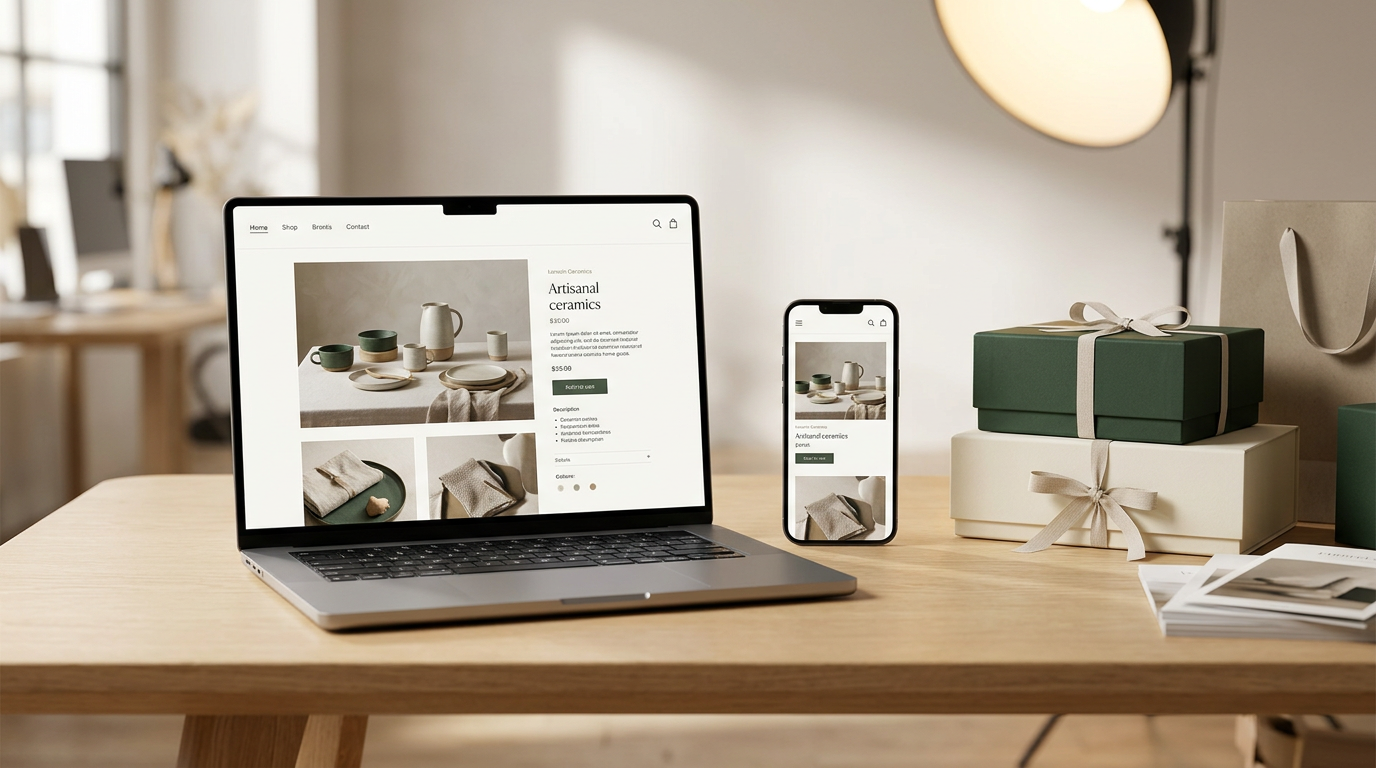
Customers should understand the full cost, payment choices, delivery timing, and returns process before they commit. Keep forms short, allow guest checkout where appropriate, and make the journey stable on a phone.
Testing a purchase regularly is one of the most valuable checks an e-commerce team can make. It reveals friction that is invisible from the admin screen.
Reviews, customer images, support details, and clear policies all reduce uncertainty when they are genuine and relevant. Use proof where the customer naturally needs reassurance, not as decoration.
A trusted store is built by the full experience after the click: confirmation, delivery updates, and the way a business handles questions after payment.